How does your product use or challenge conventions and how does it represent social groups or issues?
I made a google slides to present my answer to this question:
Here's the presentation :)
How does your product use or challenge conventions and how does it represent social groups or issues?
I made a google slides to present my answer to this question:
Here's the presentation :)
As a group we took on the challenge of editing with Danny as the main editor and Sienna and I behind him. I will be discussing the challenges we faced in the first few days (first half) and what we had to do to overcome any hurdles that came our way:
About a week after we filmed our opening sequence, we got into the editing sweet, ready to review our footage and put the puzzle pieces together in order to get the best outcome possible. We found the computer with our stuff already on it, opened up the file and watched all the clips back as a group. I was pleasantly surprised and assured that we had all the footage we needed and more and it looked great!

We noticed a few mistakes in some of the clips which were expected, either the timing was slightly off with the hits of the hammer or there were jolts (shaky camera) . We either had to cut out parts that altered the continuity of our shot or we would choose a different clip that worked. There was one tricky part in the filming that we had to work around, when Ted hits the gun out of Mike's hand, and it looked very unrealistic in the footage. To fix this we edited the clip so it stopped, made a quick cut to his face, ad back again before you saw it hit the gun.
We started by dragging our favourite clips into the timeline where we altered the length. We quickly got into the hang of how it all worked from what we'd learnt in our editing workshops. After we had each clip scattered around and edited, we placed our first shot at the beginning and went from there, putting the footage into chronological order.
Our original choices were changed once we got to the set and we noticed how different our outcome really was when watching our footage back. We originally wanted to begin with lots of cuts and hand held sections where we would follow the main guy through the club, however a lot changed, as seen on my shoot day reflection. Early on, in the editing process, we made less cuts that expected. There was only one section to our sequence that needed the most attention with cutting and rearranging different clips to firstly, make it look realistic, and secondly to quicken the pace since a lot of the speed was altered below 100% and we wanted some variation. One of the first things we did was change the speed which also helped us broaden the length of our sequence.
Much of the changes made in editing slightly affected our original concept. This was mostly to do with the timing and order that everything happened.
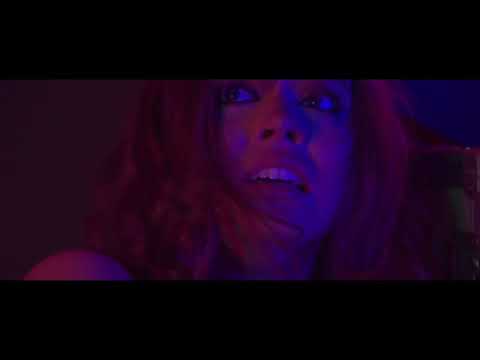
We decided to alter the speed duration to 50% in the first few shots because we wanted to achieve the night club atmosphere mixed with the sudden horror of a killer coming in. As if the girl saw it all in slow motion because she was so scared. We also began to think about a soundtrack to accompany our sequence but were quickly warned about copyright so the few ideas fo songs I had in mind had to be changed but that worked out for the better.
Throughout the week we made a creative video explaining the Mise-en-scene in our sequence and why we used each aspect of it. We then uploaded it to Youtube:
Today I reflected on how I thought our shoot day went. Here is a review on what went well, what didn't and much more:
Our shoot day, in my opinion, was really successful and much better than anticipated. We were engaged, focussed and enthusiastic in bringing our vision for our opening sequence to life. That's not to say everything went according to plan, because it didn't, but we adapted and worked around any inconveniences or obstacles that got in our way.

In terms of the set, we had unclear expectations of what it would look like so designing it was a bit of a jump into the deep end but it actually turned out much better than expected. We began moving some boards covering a brick wall with help from our teachers. Doing this created an appropriate background for as club (the brick wall) which we then placed neon tube lights on as they were the main "club" giveaway. We also used LED tunnel lights which were very expensive so we had to be SUPER careful with those. Once we chose the desired colour it looked like this:


One thing that went well for us was the cinematography of the shoot. I loved the way it turned out on camera. The LED lights created the perfect club atmosphere. Especially the reflection of the strobe light in the glass, which was an idea thought of on the day.


We even finished before lunch with more than enough footage. This also shows how organised we were and we striked the kit even faster than we set it up.
The shoot day in general ran smoothly although, there were a few issues that arose. We realised for our opening shot (pan) we would need a dolly-type piece of equipment to move the camera backwards. As a sort of "DIY" alternative, we found a wheely chair which did the job perfectly. We had stuck up our story board although we barely stuck to it, however that wasn't an issue as we were told to be flexible on the day.

Also, Ted arrived in a black shirt (meaning he was wearing all black like the victims) and mentioned he brought a white one too, we told him that it would make him stand out so we made him change. Midway through the shoot we were stuck on how the hammer hitting mike would look realistic. To fix this issue, Sienna tore some kitchen roll up and wet it with the fake blood, she then stuck it on his forehead and poured a bit of blood down his face. I was thrilled with how this turned out- very grateful for Sienna in that moment.
When we looked at the opening shot on camera before we filmed it, there was a plug socket standing out to us that looked really obvious and took away from the actresses face. So, to fix this problem, someone suggested we used one of the equipment cases to put in front of it. This both did the job as well as sparking the idea of somewhere to put empty bottles on. The case was reflected so the lights bounced off it and shadows were scene on it too. It looked great and I'm glad we discovered that problem with the white socket.

Perhaps if I were it do it again we could have added some more panning shots as the first one went really well. We could have ended the sequence by reversing the opening and do a zoom in on the girl as the man walks towards her. That could have looked cool but i liked what we did on the day.
I learnt a few new skills on the day as camera operator. Calling "camera rolling" after pressing the record button was part of the job I liked. Keeping the camera balanced- with one hand below the lense and the other on the handle was how learnt to move the camera smoothly. Double tapping the screen will zoom in on your picture and tell you whether it's in focus or not. I also learnt about the focus point as which you zoom into the eyes (when filming a close up shot) to get the clearest outcome. When following the subject, you have to keep the camera steady and be in control for the sharp movements. When I was filming Teddy with the Hammer I had to focus on the hammer whilst follining the movement of it as he quickly struck it upwards, that was one of the most challenging parts for me. I learnt that different lenses will give you a clear or closer shot and sienna would help me when changing those.
The equipment we used were; those tunnel lights, the microphone as there was a small piece of dialogue, Thew wheely chair for our opening shot, as well as each lense for a clearer shot.
I thoroughly enjoyed all parts of the filming but my favourite parts of the day were doing the pan at the start as I felt like a professional camera operator, we also had music in the back at that point which made the experience memorable. I loved designing the lights and placing them around the set. And a good part of it all was calling that's a wrap!

For our next project I can take this experience and channel it into making an even better spectacle. I've learnt that lights have a big effect on the cinematography of the shot. That it won't always turn out how you've planned. Improvising on the day is a big thing. And keeping the camera rolling is crucial so you don't miss any good bits.
I think what will be challenging in the editing sweet is making the story make sense. We got a lot of footage and what will be challenging is the best order the shots in. I have high hopes and expectations for this so I hope the editing will do us justice.


Today we researched into Saul Bass and his wife. Saul Bass was an american graphic designer as well as a filmer maker. He was born in 1920 and died in 1996. Saul bass and his wife, Elaine, remain prominent in the eyes of title sequence designers internationally to this day. From a young age, Bass was very creative, he was always drawing and he later attended an art college.

In the 1940's he left New york (where he was living) and moved to California to jumpstart a career in advertising. This led him to his first big break when he a made poster for a 1945 film: Cameron Jones. The filmmakers spotted his talent and further requested his work for the title credits as well, and this was a game changer for Saul.

Within his 40 year career Bass worked for some of the best filmmakers of all time, including Martin Scorsese, Kubrick, and Alfred Hitchcock. He became well-known after making the title sequence for "the man with the golden arm" Bass went on to do big movie, like West side story and the Shining.
This is another key example of the Basses' work:

Not only did Bass work on title sequence designs, he began, in the early stages of his career, designing logos for brands with his experience from art college. He did the logos for Kleenex, Bell, and many more.


These are examples of the products that their talents combined together created. They then moved away to spend time with their children and step away from filming making for a bit. Saul Bass was later 're-discovered' and became well known for his work with

It is said that all modern opening title sequences that introduce the theme or mood of a film are a legacy or inspired by the Basses' work.
VERTGIO (1958)

After watching this title sequence we can gather from it's main conventions that it's a physcological thriller. The psychedelic patterns used throughout the sequence portray the mystery and AN abstract theme. The red wash in the first image is indicative of a thriller, as red often connotes danger or distress.

I think it works so well because each picture and title blends into one and other which, again, gives the dazed, intoxicated affect which introduces itself to the audience from the very beginning. The font of the titles are quite classic and don't portray that much about the theme. The white writing juxtaposes the dark colours behind it which makes the credits stand out. The size is not to big but noticeable in comparison to what's portrayed in the image.


DRIVE (2011) Bold films, Nicolas Winding Refn:


 The costume consists of a typical group of criminals estimated around their 20's; tracksuits and caps, using props like a beer to represent there irresponsible behaviour, whilst contrasting with the older man. The lighting is ill and too bright, juxtaposing the night time. The costumes and lighting don't have much in common with my opening sequence but the porps, like alcohol is what we would have in our night club. Perhaps the group of boys came from a club or pub?