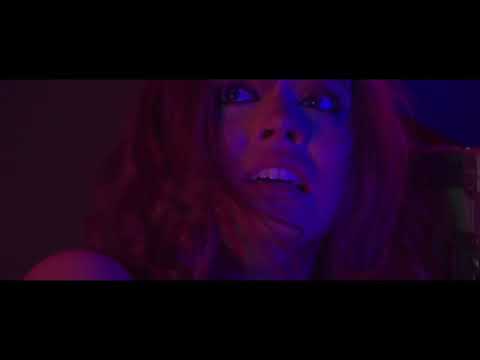
Here is our final sequence:
Tuesday, June 14, 2022

Monday, May 30, 2022
CCR TASK 4
How did you integrate technologies software, hardware and online in this project?
To answer this question, I designed my own website using Wix
Sunday, May 22, 2022
CCR TASK 3
How did your production skills develop throughout this project?
To answer this question, I created a 'Prezi' presentation- I embedded the link below:
https://prezi.com/p/cbut7yvo4vsy/ccr-task-3/?present=1Sunday, May 15, 2022
CCR TASK 2
How does your product engage with audiences and how would it be distributed as a real media text?
Our target audience:
My target audience for our sequence is male, age 18-19.
Based off of my recent research blog post into age certificates, we worked out as a group who we would want to target in order to get the most successful consumption rate for our product:
https://www.blogger.com/blog/post/edit/preview/4685637558911455924/4726113186199815581

How we engaged our target audience in our sequence (in 6 moments):
Our first clip beginnings with a pretty girl with lots of makeup on and a low cut dress which should immediately attract a male gaze.

Through use of the long shot duration on our first character, the audience can establish a possible scenario simply through the actresses reactions and shadows done with lighting. A good looking girl, terrified, should have the audience intrigued and curious to what's causing her panic. Casting the woman as the helpless victim meant we were stereotyping the girl as weak and vulnerable as well as the men's sexuality, being attracted to women. Our use of Mise-en-scene; lighting, location, facial expressions and character placement, means visually, the woman is pleasant to look at from a young male audiences point of view.


3. In this moment we see our villain hold onto the railings for support. This engages the audience as it signifies he's going to need to hold onto something before we takes a swing at his next victim. Again building up that intensity for an audience as we anticipate what's coming next. At this point we also notice the colour scheme and lighting design choices. The neon pinks and purple, red and blues with keep an audience visually satisfied. If the cinematography looks 'cool' the audience is more likely to keep watching in comparison to a setting with black and white strobe lights.

4. Characters in a sequence is another way of engaging an audience. specific to our male audience, the female character at the beginning is already a hook. However, proved from previous media like Drive, Peaky Blinders, and celebrities, consumers of a product are likely to copy a characters dress sense, style, or characteristics if they think they're cool. Our character wears a leather jacket and trainers and we never see his face, his choice of weapon... hammer. So the audience can imagine he's a pretty "badass" character and that we will find out more about him later. His hidden identity enforces an enigma to his character and keeps the audience keen to see his face.

5.There are also key conventions (technical and symbolic) in similar products which are also used in our sequence. John wick, is a very similar film that shares the same sort of lighting design qualities and main character to ours. This connection between the two, mean that the audience will find a sense of familiarity and comfort having seen a film like this before. The JW movies being such a huge success will also mean that our audience will gravitate to a film just like it. Through researching the movie and looking at it's consumption statistics I've seen that we would share a similar target audience as our genre and conventions are the same. This particular moment my sequence is very John Wick-esk.

6. The last moment in the sequence diverts the audiences expectations as we watch the killer go towards the girl, we expect him to kill her. Instead goes for the drink. This short moment of intensity is gripping for the audience and highlights an aspect of his ruthless character we wouldn't expect from him. By leaving the girl, the audience are then left on a cliffhanger. What's the girl going to do now? Where's the mn going? Will they meet again? Leaving the audience guessing is a renowned technique when engaging audience. Specific to our target audience, they are glad to see the woman wasn't harmed. Perhaps due to a man's hero complex? maybe.
Conclusion; did we engage our audience?
I think we were successful in engaging target audience. There's possible room for engaging them further like; we could have had more dead bodies around the scene, shown more action and incorporated more of that horor/action side of the genre to keep the audience engaged and imply more about our villain's shocking intentions. We could have taken advantage of the male gaze and provoked more of an objectifying take on the woman. However that could have drawn too much attention to her in the wrong way and possibly change the ideology of her character for later in the narrative. It also would have been irrelevant for the scene and changed her innocent look. So in conclusion, anything more would have been excessive.
The poster I created for our film:
Using Canva, I made what I thought our studios film poster would be. Taking into consideration that we would make more traditional media for marketing purposes. e.g character teases or simple posters displaying other hints at the movie narrative, I took one of my favourite shots from our sequence and went from there.

Hints that would engage our audience with our poster design:
I have chosen that specific picture from our sequence where you can see the woman through the man's legs. The character positioning and perspective means she looks small and scared of him. You can just make out a man's figure with the bottom of his white shirt helping to form this character. His stance is assertive and dominant, contrasting to the girl's helplessness and vulnerability. It also symbolises power and status which is often a connotation made between men and women.
The age certificate on the poster is a literal indication of what the film might contain and that it isn't suitable for anyone under the age of 18. this is intriguing for our target audience who are now at the right age, as they feel a sense of superiority being allowed to watch 18's. The "hammer to the heart" line hints at a later narrative and could imply many different meanings or hints at how the story unfolds. Will there be more romance than displayed in the title sequence? Keeping our audience guessing is always a good technique for a industry.
Lastly, the colour scheme of the poster is another attractive element that should grasp our young audience, The reds and blue we stereotypically connote with boy and girl, which in the poster is what we see; a boy and a girl. The pink font of "BARETHREAD" is a possible romance or love hint, but more importantly a contrast to the blood and gore that you'll see in the movie.
Annotating my poster :

Distributing our movie:
Personally, I think choosing a Studio like Paramount to distribute our film would be a power move. Paramount is an American production and distribution company, and is one of the longest running film studios in the world. It was created in 1916 when film producer, Adolph Zukor, put 24 actors on a contrast (which is where the 24 stars on the logo originated from) In 2014, Paramount Pictures became the first major hollywood studio to distribute all of its films in digital form. This conglomerate is located in Hollywood, California. Some of their most successful movies include; Titanic (1997), Shrek 2(2004), The Transformers franchise, and Indiana Jones (2008).

Distributing this film, I would have DVD Blu-ray and Steel book copies made. Special features like Behind the scenes, including cast interviews would be found in the Steel-book hard copy. I would also work in synergy with well-known streaming services like Amazon Prime and Disney + to promote my movie to an already formed target audience. Doing this will increase awareness and spreadability of my film, specifically to my target audience as the services place films like mine into genre categories that are easy to find e.g Thriller/Action/Horror.
My marketing and distribution campaign:
Marketing my movie would be a form of reaching as many platforms as possible so my film is exposed to and can reach as many audiences, including my target audience. Paramount will help with distributing 'Bare Thread' as they distribute their titles on DVD and Blu-ray and creating a Steel Book copy of th4e film will mean the consumers can have physical traditional media, which will also help to fight piracy of my film. Other forms of traditional media like multiple trailers, posters on busses and around london (capital) will create awareness and demand and give the movie publicity in a heavily populated city means more viewers.
Short adverts (around 30 seconds) displayed on youtube videos and TikTocks will help advertise the movie. Accessing my target audience, being young, is why I'm drawn to an app like Tik tok where young teenagers will view a short video on my product.Using social media platforms and streaming services like youtube, will also help to spread the film globally and reach an international audience. Especially due to my genre being thriller with hints of action- it can be easily translated into any language.
I would give my film a cinema release, around the Halloween season which will help to attract target audience even further. This creates that cinema experience, working nicely with the genre, that will make the experience of consuming my product that much more enjoyable. Working in synergy with cinemas, mainly in the UK will also solidify the support of my company. The BFI normally helps out other british film companies who make their film in England, so that will be a big help on the financial side of things.

Shortly after a cinema release, around a month after, I would work in synergy with Netflix to distribute my film. Netflix has around 209 million subscribers and is one of the biggest streaming services globally. They work with content providers, producers who want the licensing for their tv shows and movies to stream on their service. They're more popular with younger consumers, therefore reaching my aged 18-19 target audience. Netflix will categories their genres, so our movie i'll be easily accessible, and it's often that you films streamed on Netflixs are publicized when you open the site. So, choosing a service with such a huge consumer rate will definitely out our movie on the map.
Monday, May 9, 2022
CCR TASK 1
How does your product use or challenge conventions and how does it represent social groups or issues?
I made a google slides to present my answer to this question:
Here's the presentation :)
Thursday, March 31, 2022
Post Production Editing our sequence:
As a group we took on the challenge of editing with Danny as the main editor and Sienna and I behind him. I will be discussing the challenges we faced in the first few days (first half) and what we had to do to overcome any hurdles that came our way:
About a week after we filmed our opening sequence, we got into the editing sweet, ready to review our footage and put the puzzle pieces together in order to get the best outcome possible. We found the computer with our stuff already on it, opened up the file and watched all the clips back as a group. I was pleasantly surprised and assured that we had all the footage we needed and more and it looked great!

It visually looked just as we had envisioned, which inspired us to work cleverly and carefully on this. We saw there were some shots we clearly had done to practice, like when the camera followed the hammer down and up- we had to try a few of those. As well as the beginning 30 second pan backwards, using a wheely chair needed a few takes. Once we went through all the videos, we selected the ones we would use and dragged them into the editing space. As Danny was the main editor we let him take the ropes whilst giving suggestions at the side when appropriate.
We noticed a few mistakes in some of the clips which were expected, either the timing was slightly off with the hits of the hammer or there were jolts (shaky camera) . We either had to cut out parts that altered the continuity of our shot or we would choose a different clip that worked. There was one tricky part in the filming that we had to work around, when Ted hits the gun out of Mike's hand, and it looked very unrealistic in the footage. To fix this we edited the clip so it stopped, made a quick cut to his face, ad back again before you saw it hit the gun.
We started by dragging our favourite clips into the timeline where we altered the length. We quickly got into the hang of how it all worked from what we'd learnt in our editing workshops. After we had each clip scattered around and edited, we placed our first shot at the beginning and went from there, putting the footage into chronological order.
Our original choices were changed once we got to the set and we noticed how different our outcome really was when watching our footage back. We originally wanted to begin with lots of cuts and hand held sections where we would follow the main guy through the club, however a lot changed, as seen on my shoot day reflection. Early on, in the editing process, we made less cuts that expected. There was only one section to our sequence that needed the most attention with cutting and rearranging different clips to firstly, make it look realistic, and secondly to quicken the pace since a lot of the speed was altered below 100% and we wanted some variation. One of the first things we did was change the speed which also helped us broaden the length of our sequence.
Much of the changes made in editing slightly affected our original concept. This was mostly to do with the timing and order that everything happened.
We decided to alter the speed duration to 50% in the first few shots because we wanted to achieve the night club atmosphere mixed with the sudden horror of a killer coming in. As if the girl saw it all in slow motion because she was so scared. We also began to think about a soundtrack to accompany our sequence but were quickly warned about copyright so the few ideas fo songs I had in mind had to be changed but that worked out for the better.
Friday, March 18, 2022
MISE-EN-SCENE video...
Throughout the week we made a creative video explaining the Mise-en-scene in our sequence and why we used each aspect of it. We then uploaded it to Youtube:
Subscribe to:
Comments (Atom)